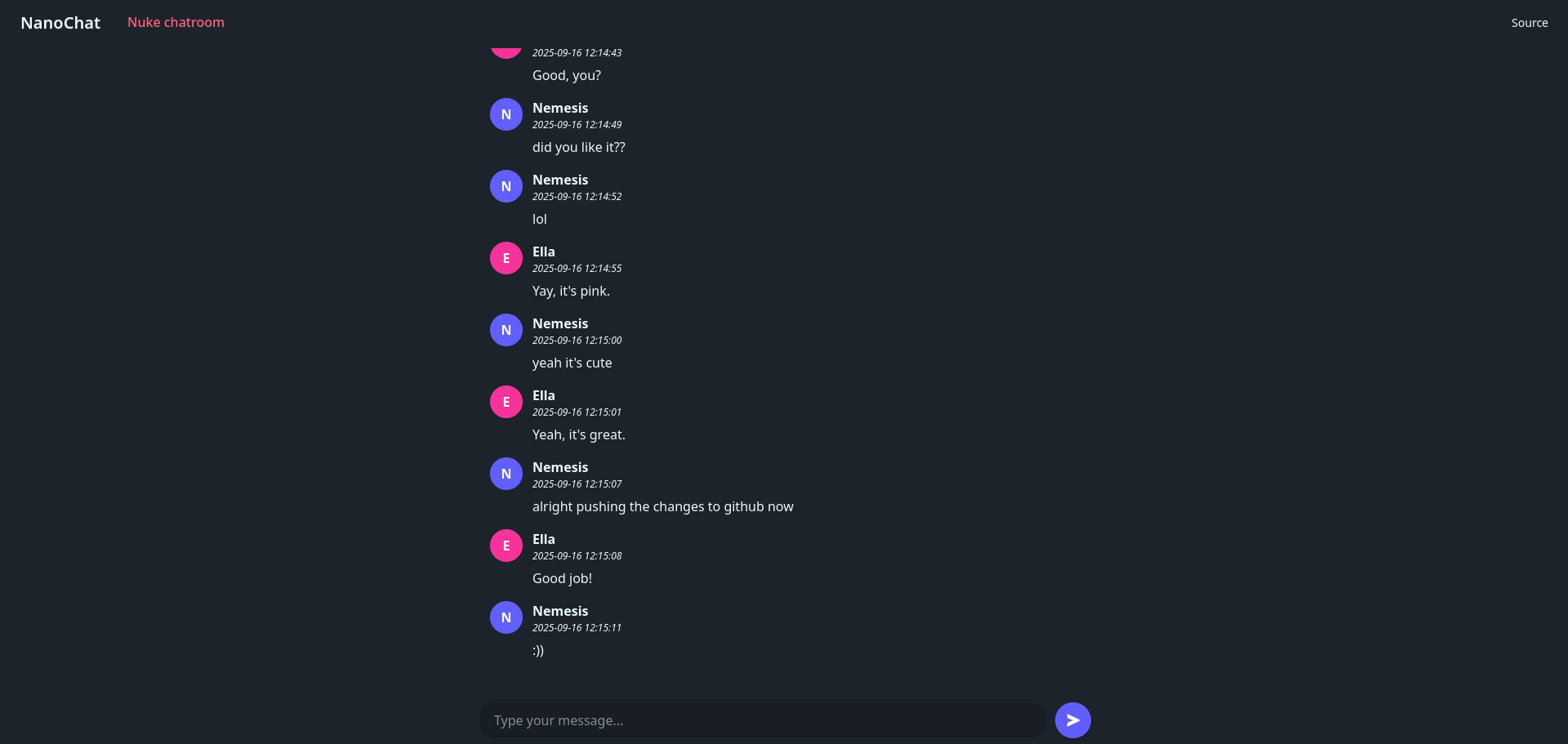
An end-to-end encrypted anonymous webchat
from nemesis3469@lemmy.world to privacy@lemmy.ml on 30 Jun 2026 21:10
https://lemmy.world/post/48864912
from nemesis3469@lemmy.world to privacy@lemmy.ml on 30 Jun 2026 21:10
https://lemmy.world/post/48864912
Source code and details: git.anarchists.space/NanoChat/Server
Features
- Small codebase
- Messages expire after 30 days
- Panic button to delete all messages in a room
- WebSocket for communication
- Docker support
Technical details
- AES-256-GCM for client-side encryption
- Key is not sent to server
threaded - newest
Cloudfare doesn’t let me through. 🙄
We were under attack from a Singaporean botnet for two weeks, so I had to put our Forgejo instance behind Cloudflare because of that 🥲
Do peojects like Anubis fail in such cases?
Anubis is for blocking AI crawlers, not DDoS attacks
I literally hate people who only wants to destroy or weaken good things 😒 But why don’t you use Codeberg? Is it because of downs every now and then because of the same reason (DDoS attacks from idiots)?
How does the anonymity work?
There are no user identities (not even cryptographic ones), and room encryption key is stored in URL which is never sent to server. Anyone can choose any nickname and you can access official instance (nanochat.anarchists.space) through Tor.
OnionShare already has a chat feature that works pretty well. What does this add?
Codebase is small and easy to audit. The panic button wipes all chat history in a room and blocks future messages. OnionShare fully depends on Tor’s built-in encryption for message security while NanoChat has its own encryption, which means you can host it on different anonymity networks.
Thanks for sharing I recommend Cheogram web which is in beta but will reach the full feature set of the app in due time
A few ideas that could further strengthen the design: